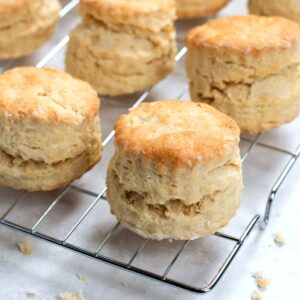
Plain Scones
A classic British Plain Scones recipe that's light and soft inside with a slightly crisp outside. Made without eggs and using simple, everyday ingredients, with all the tips and techniques you need for a great batch of homemade scones.
PRINT RECIPE
Servings: 10 scones
INGREDIENTS
- 450 g Self-raising Flour (see Self-raising Flour note below; plus extra for dusting)
- Pinch of Salt
- 2 tsp Baking Powder
- 50 g Block Margarine or Butter (cold; cubed; plus extra for greasing)
- 50 g Caster Sugar
- 200 ml Milk
- 100 ml Plain Yoghurt (dairy, soya, coconut...)
EQUIPMENT
INSTRUCTIONS
- Preheat your oven to 220°C (200°C for fan-assisted ovens, Gas Mark 7 or 425°F). Grease a couple of
baking trays with a little extra margarine/butter and set aside. - Sift the flour, salt and baking powder into a large bowl, holding the sieve up to allow some air into them. Gently stir in the sugar.450 g Self-raising Flour; Pinch of Salt; 2 tsp Baking Powder; 50 g Caster Sugar
- Using the tips of your fingers, rub the margarine/butter into the dry ingredients, again lifting as you do to allow air in. Continue until you have a sandy consistency.50 g Block Margarine or Butter
- Create a well in the middle. Whisk the milk and yoghurt together before pouring into the well. Using your hands, gently bring the ingredients together to form a soft, slightly sticky dough.200 ml Milk; 100 ml Plain Yoghurt
- Turn onto a well-floured surface. Using your hands rather than a rolling pin, gently stretch the dough to around 2cm (¾ inch) thick. Fold the dough over on itself, then gently stretch again to around 2-3cm (¾-1 inch) thick. This helps create the natural split through the middle of your baked scones.
- Using a cutter of your choice, cut out your scones and place them onto your pre-greased
baking trays . The smaller your cutter, the more scones you will get. Reform, stretch and fold the dough as required to use all of the dough. - Leave your scones to rest on the
baking trays for around 10 minutes, then brush the tops with a little milk or beaten egg, taking care not to let the glaze run down the sides. - Bake in your preheated oven for around 10 minutes, until the tops and bottoms are golden and the scones sound hollow when tapped underneath. Smaller scones may require slightly less time.
- Once cool enough to touch, transfer to a wire cooling rack to cool completely, or enjoy while still warm.
I like to use a 6cm (2½ inch) cutter, which will give you around 10 scones. You can use a smaller or larger one if you prefer. Alternatively, if you don't have any cutters, simply use an upturned glass to cut out your scones.
IMPORTANT NOTE:
All my recipes are developed using a digital scale and the metric system (grams and millilitres). Cup measurements are available as a conversion but these, unfortunately, won't always be as accurate. For best results, I always recommend baking with a digital scale.
RECIPE NOTES:
Self-raising Flour: Don't have self-raising flour? Use 450g plain flour (all-purpose flour) with 6 teaspoons of baking powder instead, then still add the extra 2 teaspoons of baking powder listed in the recipe, giving you 8 teaspoons of baking powder in total. See my Self-raising Flour Ingredient Guide for more information and cup conversions.
Dough Texture: The dough should be soft and quite sticky. Make sure your hands and work surface are well-floured rather than adding lots of extra flour to the dough, as this can make the finished scones heavier.
Tried this recipe?
Tag @bakingwithgranny or use the hashtag #bakingwithgranny!