HomeRecipesScottish

Drop Scones (Scotch Pancakes)

Author: Amy Beth Reid Updated: 24 August 2026

5 from 50 votes

on Drop Scones (Scotch Pancakes)

• This post may include affiliate links.

These traditional Drop Scones, also known as Scotch Pancakes or Scottish Pancakes, are soft, fluffy little pancakes cooked on a hot girdle, griddle or frying pan. I’ve been making them since childhood – initially with my Mum’s help! – and her little trick of adding oil to the batter keeps them lovely and soft, particularly handy if you’re batch baking some to freeze or enjoy later.
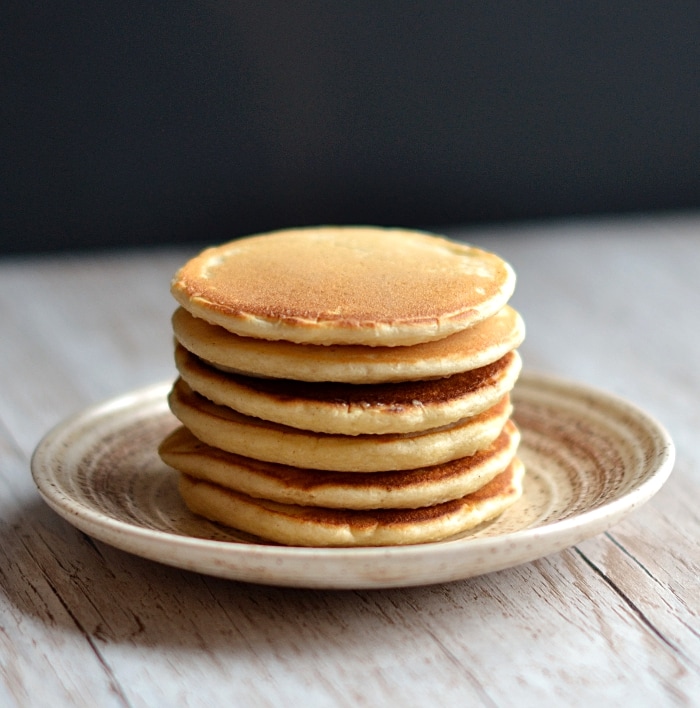
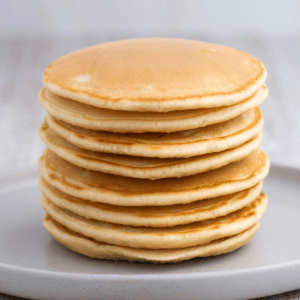
Stack of golden Drop Scones on a rustic plate.

Drop Scones Recipe Snapshot

  • Also Known As: Scotch Pancakes, Scottish Pancakes and Dropped Scones.
  • Texture: Soft and fluffy – thicker than traditional British pancakes but not as thick as American pancakes.
  • Difficulty: Very easy.
  • Prep Time: 10 minutes.
  • Cook Time: 20 minutes.
  • Serves: Approx. 12 pancakes.
  • Dietary Info: Nut-free, with substitutions for gluten-free, egg-free, dairy-free and vegan included below.
  • Cooked On: A hot girdle or frying pan.
  • My Mum’s Top Tip: A spoonful of oil in the batter helps keep the pancakes soft, especially when batch baking
  • Best For: Breakfast, teatime, Pancake Day or freezing for later

Summarise & Save this Recipe on:

What are Drop Scones?

Drop Scones are small, soft and fluffy Scottish pancakes made by dropping spoonfuls of batter onto a hot girdle or frying pan. They’re also commonly known as Scotch Pancakes or Scottish Pancakes, while some families call them Dropped Scones.

They’re thicker and more risen than the thin, crêpe-like British Pancakes traditionally made across the UK on Shrove Tuesday, but generally not as thick or cakey as American-style pancakes. And although they share some similarities with Scottish Crumpets, the two are different bakes – Scottish Crumpets are larger and more spongy, with a distinctive bubbly, holey surface.

Drop Scones are usually made with self-raising flour, giving them their light, fluffy texture, and are traditionally served warm with butter, jam or other simple toppings. They also make a great breakfast option for Pancake Day (Shrove Tuesday).

Girdle or Griddle?

In Scotland, you’ll often see girdle used where recipes elsewhere might say griddle. A traditional Scottish girdle is a flat, circular iron plate used over the fire for cooking things like Old-fashioned Scones, Scottish Oatcakes and English Pancakes. The word has been used in Scots for centuries, and “girdle scone” is even recorded as a traditional Scots term. These days, a flat griddle pan or ordinary frying pan will do the same job for your Drop Scones.

My Family’s Drop Scone Recipe

If there’s one type of baking I feel I’ve mastered over the years, it’s pancakes! I’ve even joked about writing an entire recipe book dedicated to them – and it all started with these little beauties.

I’ve been making Drop Scones since my childhood – alongside my Golden Syrup Chocolate Chip Cookies and Mars Bar Cake – with my Mum on hand to help me perfect them. They’re still one of my favourite things to make for breakfast, especially eaten warm from the girdle with a drizzle of golden syrup or a spreading of butter melting on top 🤤 And my own kids love them now too – whether it’s at breakfast or as a wee snack with fruit, yoghurt or lashings of jam.

They’re also one of those recipes I’ll often make in a bigger batch. Drop Scones freeze brilliantly, and a minute or so in the toaster is usually all they need to bring them back to life. My Mum’s trick (passed on to her from her own Granny) of adding a little oil directly to the batter also helps them stay softer for longer, rather than quickly drying out – something I still do every time I make them!
  • Have used it 20 times now!

    I struggled to find a pancake recipe for many years, but since finding these, I have only used this recipe. I must have used it 20 times by now, and every time the pancakes are gorgeous and delicious! Thank you!!
    – Loti
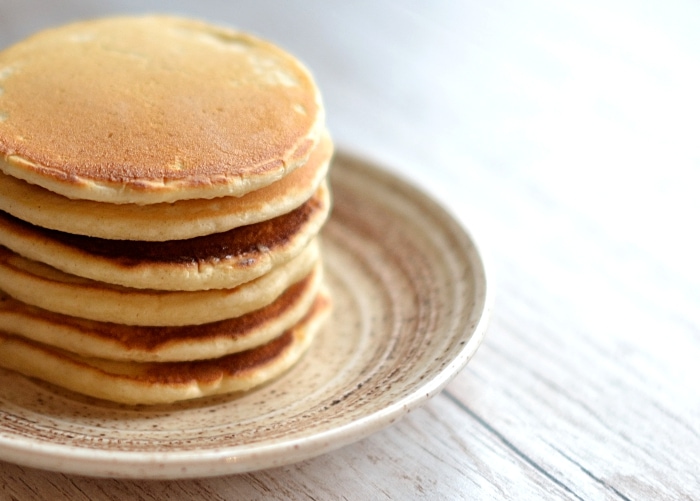
Stack of golden Drop Scones on a speckled plate

Key Ingredients

Self-raising Flour: Self-raising flour gives Drop Scones their soft, fluffy texture without the need to add a separate raising agent. If you’re baking outside the UK, where self-raising flour can be harder to find, I have a tested plain flour and baking powder conversion in my Self-raising Flour Ingredient Guide.

Caster Sugar: Drop Scones only need a little sugar – just a wee bit to give them a gentle sweetness without making them overly sweet. Caster sugar is ideal because its fine crystals dissolve easily into the batter. You can read more about it in my Caster Sugar Ingredient Guide.

Free-range Eggs: I usually bake with mixed-weight free-range eggs, so I make this recipe with what is probably around medium eggs in the UK (roughly equivalent to large eggs in the US). Egg size doesn’t need to be overly exact here, though, so don’t worry if yours vary slightly. They help bind the batter and give the Drop Scones some of their softness and structure.

Milk: This recipe is quite forgiving when it comes to milk. Dairy milk works well, as do many non-dairy milk alternatives. Whatever you use, the important thing is the finished consistency – you’re looking for a thick, spoonable batter that drops easily from the spoon without immediately spreading across the girdle.

Sunflower or Vegetable Oil: This is my Mum’s little trick! Rather than only using oil to grease the girdle, she adds a spoonful directly to the Drop Scone batter. It helps the cooked pancakes stay lovely and soft instead of quickly drying out, which is especially useful if you’re making a large batch to eat later or freeze. Use a neutral-flavoured oil such as sunflower or vegetable oil so it doesn’t affect the overall flavour of the pancakes.

See the recipe card for a full ingredients list, required quantities and cup conversions.

Substitutions & Additions

Self-raising Flour: If you don’t have self-raising flour, you can make your own using plain flour and baking powder. For the 220g self-raising flour in this recipe, use 220g plain flour with 3 tsp baking powder. You can find more information in my Self-raising Flour Ingredient Guide.

Milk: Dairy milk works well, as do many non-dairy milk alternatives. The most important thing is the consistency of the finished batter – it should be thick and spoonable, rather than thin and runny.

Additions: I sometimes add blueberries or chocolate chips to the batter when the kids request them. Blueberries are especially lovely for breakfast, while chocolate chips make them a little more of a treat. Both work well, as do raisins and sultanas, without needing to change the basic method.

Looking for dairy-free, gluten-free or vegan adaptations? See the Free-from & Vegan section below.

Free-from & Vegan

Gluten-free Options:

A gluten-free self-raising flour can be used as a straight swap for the wheat self-raising flour. Gluten-free flour can sometimes absorb a little more liquid, so if the batter feels too thick, add an extra splash of milk until you reach the usual thick, spoonable consistency.

Nut-free Adjustments:

This recipe contains no nuts, but as always, be sure to double-check the allergen lists for your individual ingredients.

Dairy-free Swaps:

Use your favourite dairy-free milk alternative in place of dairy milk. The recipe is otherwise naturally dairy-free, provided you use oil rather than butter for greasing the girdle or frying pan.

Egg-Free Adaptions:

I have tested these Drop Scones using both applesauce and mashed banana in place of the eggs, and both work well, but bear in mind that banana will add a little flavour of its own, while applesauce is the more neutral of the two. Shop-bought vegan egg replacer, such as Oggs or Bob’s Red Mill Egg Replacer, should also work, although I haven’t personally tested them in this recipe yet – if you do, I’d love to hear how you get on!

Vegan Substitutions:

To make these Drop Scones vegan, use a dairy-free milk alternative and replace the eggs as above. Applesauce or mashed banana are both options I’ve tested, while a shop-bought egg replacer may also work.


Allergy Disclaimer & Resources:

Any advice or suggestions to make recipes “free-from” or vegan are purely suggestions. Please double-check all packaged ingredients individually, taking extra caution when baking for those with allergies or intolerances.

For official guidance on food allergies, please see Food Standards Agency (food.gov.uk) | For more info on coeliac disease, please see Coeliac UK (coeliac.org.uk) | For more info on a vegan diet, please see The Vegan Society (vegansociety.com)

recipe featured in:

my debut self-published cookbook

Scottish Bakes

order now!

How to Make Drop Scones

Drop Scones are very quick to make, but getting the batter consistency and heat of your girdle right makes all the difference.

  1. Mix the dry ingredients. Add the self-raising flour and caster sugar to a large bowl and mix together.
  2. Combine the wet ingredients. In a separate jug or bowl, whisk together the eggs, milk and oil.
  3. Make the batter. Gradually add the wet ingredients to the flour mixture, whisking as you go, until you have a smooth, thick batter. It should drop easily from a spoon but shouldn’t be so runny that it immediately spreads across the girdle.
  4. Heat the girdle. Place your girdle or frying pan over a medium heat and lightly grease it with a little oil. Give it a few minutes to heat properly before adding the batter.
  5. Cook the first side. Drop about 2 tablespoons of batter per Drop Scone onto the hot girdle, leaving a little space between each one. Cook until lots of little bubbles begin appearing on the surface and the top starts to look as if it is drying out.
  6. Flip and finish cooking. Turn each Drop Scone and cook the other side until golden. Continue with the remaining batter, adjusting the heat and lightly greasing the girdle again if needed.

Top Tips for Perfect Drop Scones

  • Get the Girdle Temperature Right: Medium heat is usually best. If it’s too hot, the outside will brown before the middle has had time to cook. Too cool, and the Drop Scones can spread rather than puffing up nicely.
  • Look for the Bubbles: Don’t rush the flip! Wait until lots of little bubbles have appeared across the surface and the top is starting to look a little drier.
  • Watch the Batter Consistency: You want a thick, spoonable batter that drops easily from the spoon but doesn’t immediately spread across the girdle. If it looks very runny, your Drop Scones will end up flatter and thinner.
  • Use Around 2 Tablespoons per Drop Scone: This gives you nice, even-sized pancakes and makes it easier to judge the cooking time from batch to batch.
  • The Oil Trick: Don’t skip the spoonful of oil in the batter. My family has always added it to help keep the Drop Scones soft, especially useful if you’re making a larger batch to eat later or freeze.
  • Use the First One as a Tester: Where are my Gilmore Girl fans at?? The first pancake will tell you whether the girdle is hot enough, too hot, and whether the batter is spreading exactly as it should. You can then adjust the heat before cooking the rest.

Storage, Freezing & Reheating

  • Storage: Once completely cool, keep your Drop Scones in an airtight container at room temperature. They’re at their best when fresh, but will keep well for a few days.
  • Freezing: Drop Scones freeze really well, which is why I often make a bigger batch. Once completely cool, freeze them in an airtight container or freezer bag, separating the layers with a little baking paper if needed to stop them sticking together.
  • Reheating: My favourite way to bring frozen Drop Scones back to life is to pop them straight into the toaster for a minute or so. You can also gently warm them in a toaster or under the grill until heated through, then serve with butter, jam, syrup, or whatever you fancy.
  • Simple recipe but delicious!

    Such a simple recipe, but delicious. Followed your instructions exactly and had them for breakfast in minutes. Thank you again.
    – Jacqueline

Drop Scones FAQs

Are Drop Scones and Scotch Pancakes the same thing?

Yes. Drop Scones and Scotch Pancakes are two names for the same type of small Scottish pancake. You may also see them called Scottish Pancakes. They’re thicker and fluffier than traditional thin British pancakes, but generally not as thick or cakey as American-style pancakes.

Are they called Drop Scones or Dropped Scones?

Both names are used. Drop Scones is probably the name you’ll see most often in modern recipes, but Dropped Scones is also a traditional name and is still what some families call them. The name comes from the way spoonfuls of batter are dropped onto a hot girdle or frying pan to cook.

Why is my Drop Scone batter too thin?

The batter should be thick and spoonable, dropping easily from the spoon without immediately spreading across the girdle. If yours seems too thin, add a little extra self-raising flour, a spoonful at a time, until you reach the right consistency. Different flours – and even different egg sizes – can mean you need slightly more or less milk, so the overall consistency is more important than forcing in every last drop if you don’t feel you need it.

Why aren’t my Drop Scones fluffy?

There are a few things that can affect the rise. Make sure your self-raising flour is still fresh, avoid overmixing the batter once everything has come together, and check that your girdle or frying pan is properly heated up before you start cooking your pancakes. A batter that is too thin can also spread too much, leaving you with flatter Drop Scones.

How do I know when to flip Drop Scones?

Watch the surface rather than relying entirely on time. Little bubbles should begin appearing across the top, and the surface should start to look a little drier, with the edges beginning to set. That’s your cue to flip! The underside should be nicely golden, then the second side will cook a little more quickly. If your pancakes are browner than you’d like, reduce the temperature a little for the next one.

More Classic Scottish Bakes

If you loved these Drop Scones, here are some more of my favourite Scottish baking recipes for you to try next:
Save this recipe!

Want to save this recipe for later? Pop your email below and come back to it when you’re ready to bake.
Drop Scones (Scotch Pancakes)

Traditional Scottish Drop Scones – also known as Scotch Pancakes or Scottish Pancakes – made with a simple batter and cooked on a hot girdle (griddle) or frying pan. Soft, fluffy and lightly sweet, with my Mum's little trick of adding oil to the batter to help keep them soft.
4.9 from 50 votes
PRINT RECIPE
Course: Dessert, Snack
Cuisine: Scottish
Prep Time: 10 minutes
Cook Time: 20 minutes
Total Time: 30 minutes
Servings: 12 pancakes

INGREDIENTS
 

  • 220 g Self-raising Flour (see Self-raising Flour note below)
  • pinch of Salt
  • 50 g Caster Sugar
  • 2 Free-range Eggs (at room temperature; see Egg Size note below)
  • 280 ml Milk
  • 1 tbsp Sunflower or Vegetable Oil (plus extra for greasing)

INSTRUCTIONS

  • In a large bowl, sift the flour and salt, then add the sugar and gently stir to combine.
  • In a separate bowl or jug, whisk the milk & eggs together with a fork, then gradually add them to the dry ingredients while whisking together. Once combined and you have a batter, add the oil and mix through until just combined.
  • Grease your girdle (griddle) pan or frying pan with a little oil and warm over a low-medium heat. Once hot, spoon small amounts of the batter (around 2 tablespoons per pancake) onto the girdle, leaving a little space between each to allow them to spread.
  • Allow your pancakes to cook – you will know they are ready to flip once small bubbles form on top and begin to pop, and they appear a little drier with firm edges. Using a spatula, flip the pancakes and cook the other side for a couple of minutes or until golden brown.
  • If your pancakes are browning too quickly, simply turn your girdle heat down a little before cooking the next ones.
  • Remove from the heat, allow to cool on a wire cooling rack a little before serving with your toppings of choice.

IMPORTANT NOTE:

All my recipes are developed using a digital scale and the metric system (grams and millilitres). Cup measurements are available as a conversion but these, unfortunately, won’t always be as accurate. For best results, I always recommend baking with a digital scale.
RECIPE NOTES:

Self-raising Flour: Don’t have self-raising flour? For this recipe, simply whisk together 220g (1⅔ cups) plain flour and 3 teaspoons baking powder instead. If you bake regularly, you can also make a larger batch to keep in your baking cupboard. For full instructions, cup conversions and answers to common questions, see my Self-raising Flour Ingredient Guide.
Egg Size: When it comes to eggs, I always buy mixed-weight free-range eggs. Generally speaking, egg size doesn’t make a huge difference in most baking, unless you are using sizes that lean towards the extremes. If you’re unsure which eggs to use, I recommend medium eggs in the UK, which are roughly equivalent to large eggs in the US. That’s what this recipe has been tested with.
Batter Consistency: You’re looking for a thick, spoonable batter that drops easily from the spoon but doesn’t immediately spread across the girdle. Add the milk gradually, as different flours and egg sizes can affect how much liquid you need.
Oil: The tablespoon of oil added to the batter is intentional – it’s my Mum’s trick from her Granny, for helping the cooked Drop Scones stay lovely and soft, especially if you’re making them ahead or freezing them. You’ll also need a little extra oil for greasing the girdle or frying pan.
Serving: 1pancake | Calories: 118kcal | Carbohydrates: 19g | Protein: 4g | Fat: 3g | Saturated Fat: 1g | Polyunsaturated Fat: 0.3g | Monounsaturated Fat: 1g | Trans Fat: 0.003g | Cholesterol: 30mg | Sodium: 20mg | Potassium: 65mg | Fiber: 0.4g | Sugar: 5g | Vitamin A: 79IU | Calcium: 36mg | Iron: 0.3mg

Nutrition information is provided as a guide and is based on automatic calculations. Actual values may vary depending on the ingredients and brands used, how the recipe is prepared, and individual portion or serving sizes.

Tried this recipe?

Tag @bakingwithgranny or use the hashtag #bakingwithgranny!
Pin recipe for later

Love this? Share it!

More Recipes You Might Like

ABOUT THE AUTHOR

Amy Reid

Amy Reid is an award-winning food blogger, mother, wife and cookbook author. Inspired by her childhood in the kitchen with her Mum – a professional baker and her children’s Granny – Amy now shares her tried-and-tested traditional home baking recipes with bakers of all abilities around the world. She lives in Scotland with her husband, two sons and her small pack of Siberian huskies.

Leave a Review

Got a question? Tried this recipe & want to leave some feedback? Please use the comment section below! Required fields are marked *

Recipe Rating


This site uses Akismet to reduce spam. Learn how your comment data is processed.

116 Comments

  1. Hi Amy
    My great grannie’s recipe which I follow for Scotch pancakes, uses bicarb and cream of tartar.
    Making them today.

    Your book is great .

  2. This is an addition to my former comment, and apologise : I asked a question about thickness but saw, too late, that someone ask the same. So I apologise and don’t need answer, since I got it.
    MC

  3. 5 stars
    Great recipe, and an enormous thankyou for using metric system. I’ve no problem with cups for sugar or other ingredients whose density does not differ from a brand to another one, but for flour, cups are a nightmare : flours have different densities according to the the brands, the grind…, so, from one brand to another, a cup won’t have the same equivalent in grams. Going on cooking websites, you read that 1 cup of flour is 120 g,140 g, and even (and frequently) until… 170 g !!! And so, the result may be very different of what it should be (well, just for one cup, there is no incidence, but when you have to use 3 or more cups, that’s a real problem).
    If someone gives a recipe in grams (I mean grams really weighted and tested by him, not an equivalence given by a calculator), there won’t be problem, because a gram is a gram, whatever would be the density of the flour, unlike the volume – a cup, for instance – according to this density, may lead to disappointing results (not enough flour, or too much flour).
    I’m now going to test your drop scones, but I have a question : on websites I see drop scones really thicker (looking like nearly 2 cm thick). What the thickness come from, and how may I get it ?
    Thankyou for answering, thanks to your granny, and have a nice Christmas time
    MC

  4. 5 stars
    Hello from Brittany. First of all : sorry for my old fashioned and unprecise english, learnt more than 70 years ago and not practiced a lot, except with the Beatles, far ago, and now GB cooking, that I love.
    I just cooked your scones this afternoon, because another recipe was a fiasco (the Queen one, yet ! :-) Too much flour). Perfect result with yours !!! Thanks a lot, and also : thankyou very very very much for using precise grams, instead of cups and spoons : I understand that, for people used to traditional cups and spoons, grams may look uneasy, but for my part, cups and spoons ARE the uneasy thing (well, for spoons, it depends, sometimes it’s OK, we also have spoons in France, but our problem is that they are not “standard” as yours : so, according to wheather it comes from your granny old times silverware, or from a modern low price shop, a spoon will have very different containing !!! Yours, at least, are “standard”, but when I read that a recipe needs “3 spoons butter”, I wonder how mesuring “spoon of butter” : have I to melt it ? :-)
    Concerning the flour, the problem is that the way it goes into the cup, more or less “packed”, even if you don’t want to, may lead to a substancial difference with the recipe given. For cakes, the result may be deceiving, just because of that.
    So, a double thankyou, Amy, I’ll come back to your website to see other recipes (and shorter comments, I sware !!!)
    MC

  5. 5 stars
    I did this without sugar, and it was perfect. I think it even cooks better without the sugar. Served with defrosted frozen raspberries. It was amazing.

  6. Hi regarding the pancakes my late mum made them on the girdle but I remember she used a potato cut in half to grease the pan & not oil.

  7. 5 stars
    Perfect first time – light, fluffy, versatile . Great. Will be using this recipe from now on, thank you! Super easy too.

  8. Always nostalgic to make these pancakes as the smell, taste and process bring back so many memories from different stages of life! I love finding out the variations people make to traditional recipes and the stories and reasons behind them. Every day is a learning day

  9. 5 stars
    Your Granny is great!! No matter what ingredients I use this works. We are now gluten and dairy free and I use freee flour and almond milk and they are still perfect. Best scone/pancake recipe ever

  10. 5 stars
    Hi Amy
    Thank you for being gracious . I don’t know why people have to give negative comments. You kindly share your recipes and it’s entirely up to folks to use them or not, nobody says they must. At the moment I am sitting in my kitchen watching my 18 year old granddaughter devouring the pancakes she made from your recipe, she made them a bit larger and poured honey over them they are delicious. I am never disappointed with the recipes you share. The finished bake may not always look like your pictures but who cares how they look as practice will make perfect lol! the important thing is they taste great and I have fun baking them. Every blessing

  11. Hi Amy

    Gave these a try tonight and sorry (y’know I follow your recipes every week) but I have got to be honest, these are not Scottish pancakes, far too runny and no oil to be used plus one egg. They are meant to be thick batter and this mix is like crepes.
    They were ok but not typical mix of a Scottish pancake, sorry.
    And the term “Scotch” is only nowadays used for the drink, the pies & broth. Most of us consider “Scotch” to be offensive and an insult.

    1. Hi Clarice. Thanks for taking the time to comment. However, I think you’re possibly confusing Scotch Pancakes with American-style Pancakes. Scotch Pancakes are not as thick and could be described as somewhere between American-style pancakes and crepes.

      As with all recipes on Baking with Granny, everyone will have their own family recipes that may vary from my own – that’s not to say either is wrong or not considered typical. The addition of oil is a tip from Granny (as explained above) to keep your pancakes fresher for longer – you don’t need to add this, should you prefer not to.

      I’m afraid I also disagree with your sentiment that “Scotch” is used as an insult. As you say, it is often used to describe Scottish produce, such as whisky, pies and broth; pancakes too. You will also find them named this when buying from a supermarket.
      As Scot myself, I would never consider it to be offensive and I’m not aware of any other Scots who would either. But my apologies if it has offended you on this occasion, that’s obviously not my intent.

      Hope that addresses your concerns.
      Amy :)

    2. I am Edinburgh born and was raised by a Scot who brought me up with all this rigid proper thinking and it IS ‘Scotch’ in this case! Our landlady was from Aberdeen and made these all the time, never calling them ‘Scottish’ pancakes. Personally I can’t wait to try this – with benefit too of all the other input…

  12. 5 stars
    Such a simple recipe but delicious. Followed your instructions exactly and had them for breakfast in minutes. Thank you again.

  13. 5 stars
    Always best to use golden castor sugar and a bit of golden syrup, I also add vanilla which really improves. Use butter – always

  14. 5 stars
    I made tiny ones and used them instead of blinis, with cream cheese and smoked salmon topping. They all disappeared like snow off a shovel
    Great recipe – thanks!

  15. 5 stars
    Thank you for this recipe. I always wanted to make drop scones like my great grandmother used to make and this recipe is perfect for them. The pancakes are just like she used to make. They brown perfectly and taste delicious with such a nice bite to them. They freeze up well too and taste just as nice when heated up in the toaster.

  16. 5 stars
    I simply LOVE these pancakes. Since I discoverd this recipe it became the only one I make because it’s easy, delicious and always guarantees 8 pancakes, 2 for each one at my house (I like to make them bigger than the ones disclosed in the pictures on the site).

    Also, I just came back here to check again if I could freeze them because I just started this freeze-for-later lifestyle to try and eat better and now I wanna bake and freeze everything whenever I feel like it so when I don’t feel like it I still have easy-to-make or easy-to-heat-up stuff. Hence, it’s good to know they can be freeze!

    Thank you so much for such an awesome recipe! These pancakes with jelly combined with fruits and/or honey are the perfect breakfast. :)

  17. 5 stars
    This is the best pancake recipe I ever made. 2 eggs worked so much better and runnier was easier to work with without being to runny like a traditional pancake.

  18. 5 stars
    Love this recipe remember me off childhood and my dad making pancakes and scone ever Sunday morning loving memories ❤

  19. 5 stars
    A great recipe which my sister told me about. It works every time, I used apple purée, grated some lemon zest, a splash od lemon extract and added sun blushed raisins….delicious Thanks :)

  20. 5 stars
    I loved the consistency of the batter. I used my griddle with varying results. That’s down to me and practice will make perfect
    The taste was deliciously sweet, Hubby (being a good Canadian) had his with Maple Syrup, I had mine as they were.
    I’ve yet to get the perfect round shape but then that’s a good excuse to make some more.

    1. Was great to mad – m e weren’t perfectly round either – will have to practise mo re added some lemon juice to flavour the batter after cooking some and that was also nice.

      Practise makes perfect so another go for me ….

  21. My mum’s recipe for pancakes,which was also her grannie’s, contain baking soda and cream of tartar. SR flour,egg,,milk to mix .
    I also have a girdle,which is also hers.
    Daughter’s request for today!!

  22. I and anyone I know has always called them dropped scones and not drop scones.
    The recipe is similar though

  23. oh my word, this is a taste of childhood! My mum used to make these for us sometimes when we came home from school. Your recipe tastes exactly like hers. I tried being healthy the first few times I made these by skipping the sugar, which is also v tasty, but I’ve just tried the sweet version with a little butter melted in while they’re warm from the pan, and I’m transported back to our old kitchen, watching her drop the batter and transform into perfectly browned discs. Thank you!

  24. Hi, I’m an old guy in Scotland. We do (or did) these drop scones in a Sunday fry- up. They soak up all the fatty goodness from the bacon and sausages. Like many traditional foods it’s a case of waste- not. The fat is calories and fills hungry bellies.

    1. 5 stars
      My Granda would fry pieces of dumpling in the bacon fat and sprinkle sugar on them. I’m getting hungry just remembering them! Some people would throw their hands up in horror at the suggestion of actually eating the fat from bacon & sausages, but this is the way we were brought up – waste not, want not, as you said. My blood cholesterol levels are extremely low, by the way!

    2. 5 stars
      I hear you Martin. Fries pancakes with a soft fried egg on top. Cut round and at the end after eating all the white you get the daddy, fried pancake and soft egg yolk for the final bite. Almost as good as tattie scones

  25. 5 stars
    Beautifully fluffy and light, even when reheated, though worth mentioning that I added about 5g baking powder with my self raising flour for that extra added fluffiness. My 2 year old added some blue gel food colouring and chocolate sprinkles and his pancake still turned out really well, and still managed to look tasty despite the unnatural colour. I wasn’t sure about adding oil to the batter, but it didn’t make the batter heavy or greasy. Definitely makes enough for an average family of 4 if you’re having just pancakes, or could stretch further if you’re serving with other breakfast items.

  26. 5 stars
    absolutely delicious,halved the recipe so I didn’t have too much batter left over they where moreish better than shop bought any day, going to get some buttermilk now.

  27. 5 stars
    What a great simple recipe thank you for making it so easy. Just like my granny used to make when I was wee. Mammaj

  28. 5 stars
    My son and I had never attempted these before and they were much easier than I expected. Our first few were interesting shapes, but all tasted absolutely delicious. Thank you

  29. 5 stars
    Used Gluten Free self raising flour and these turned out perfectly! Do you know roughly how many calories per pancake if it made 12 from the normal recipe? Thank you!

  30. 5 stars
    This was my first time making these, delicious recipe, easy to do, great to do with the kids. I used a Pyrex jug for dispensing into frying pan the spoon had a mind of its own.

  31. Turned really nice, I perhaps should have added a little bit more sugar but like them.
    Thank you…

    1. Turned out really nice, perhaps next time I should add a little more sugar..perhaps not as I enjoyed them they way they were. Thank you.

  32. Great recipe, thanks for sharing! I have searched high and low for a good, tasty, fluffy pancake recipe which is harder than you would think. I substituted SR flour with soda bread flour and got the batch of lovely, tasty, fluffy pancakes that I have longed for! Will be bookmarking this one

  33. Ah, these are what New Zealanders call “pikelets”! One of my favourite things to make when I’m a bit peckish and want something super versatile.

  34. I halved the recipe as my nieces have small appetites however they loved them after sneaking a couple :) I ended up having to make more:) my 8 year old niece helped too.
    The recipe and instructions were super easy and simple, now they’re making it at home too.
    I don’t care where the recipe originates from; all I know is that this is the first time I made scotch pancakes and they turned out perfect.
    And today, I’ll be making them with my little cousins who saw the pictures and wanted I on some of the scotch pancake action:)

  35. I tried recipe however was very runny even with less milk made them more like a crepes I added more flour and 1/2 tsp cream off tarter & 1/4 tsp baking soda came out perfect

  36. 5 stars
    OMG!! I have just made these for the first time and can not believe how easy they were and they came out perfect and delicious! I have tried so many complicated ‘fluffy’ pancake recipes, making my own buttermilk etc etc. These are better than any other I’ve tried. Good old fashioned recipes are the best. Thank you!!

  37. 5 stars
    Thank you so much for, to my taste, a perfect pancake.
    I got 12 good-sized pancakes -6 plain and 6 with sultanas.
    I didn’t have sunflower or vegetable oil so I used Rice Bran oil
    The first time I attempted to make, as we know them,
    ‘pancakes’ they were crepes and not what I had intended.
    I since realised the ‘pancakes’ I like are also known as
    Drop Scones or Scotch Pancakes.
    Thank You!

  38. 5 stars
    Hi! I love this recipe! I’ve made it a few times now and they always turn out perfect! They don’t taste like baking powder which other pancakes usually do, and I hate that taste. Thank you for this recipe!

  39. 5 stars
    Best scotch pancake recipe I’ve ever used!! I have made these about 3 times in the past couple of weeks because they are so easy and tasty. Mine used to always come out a bit too thick but these are the perfect compromise as they are still ‘thick’ pancakes but thin enough to stack and cook quickly and evenly. YUMMM

  40. 3 stars
    recipe was good but tastes too eggy so added a little bit of vanilla made all the difference

  41. In Scotland, your ‘griddle’ is traditionally called ‘A GIRDLE’ which is a thick metal plate no sides and a high overhead handle across the diameter.

    1. I’ve always known it as a GIRDLE..pancakes are made on a girdle, girdle scones on a girdle oatcakes, tattie scones…always on a GIRDLE. I still have my granny’s girdle. Black and flat with a handle arching over it. It was used on an open fire or latterly on a range thus the high arching handle so that it didn’t get too hot to handle. Sometimes I use the girdle on our BBQ, a modern twist on the open fire that I knew as a young child in the 40s. Bringing my pancake recipe up to date for the family I serve them at breakfast with loads of bacon and maple syrup. Make them in advance, load up the freezer so that when they all descend from Sassanach land we have dozens to hand without the hassle of weans shouting for more and stressing me out!!

      1. 5 stars
        I’m so jealous of you having your Granny’s girdle. In my case it would have been my Granda’s. I wonder where it went… Now I’m keeping my eyes open at car boot sales and the like. This recipe is excellent and very similar to my mother’s. She would make pancakes when expecting a “visitor”. She didn’t have money for boughten baked goods and she would have these, plus home-made jam and a sponge cake of some kind. We were banished from the kitchen when she made them and laid them in overlapping rows in a clean folded tea towel. They were wonderful but we had to wait till the visitor left before we could have any!

        1. My mother didn’t have a girdle so used a thick baking tray on gas hob. Didn’t have scales so everything was done with spoons. Always made the night before but no fridge so covered in a jug and kept beside the cold water sink. A bit of suet in a rag rubbed over the hot plate for cooking. Best drop scones I ever had. I got the first ‘raggy’ one.

        1. What we in England refer to as a “griddle” those in Scotland refer to as a “girdle” if you had of taken the time to read all the comments or even comments made early on you would picked up on this! And yes also known as a flat bottomed pan, long winded but if it tickles your fancy go for it

  42. 5 stars
    Thanks for a great recipe. I’ve tried a few fo drop scones and these consistently turn out the best. Thank you for sharing :)

  43. I live in Denmark where self-raising flour is not available so my question is very simple :how much baking powder do I need per 100 grams of plain flour?
    Your recipes look delicious and I’m looking forward to trying everyone or at least a whole lot of them

  44. My grandmother used to make these,using a bakestone, only difference is she used to thinly slice a cooking apple into small bits and stir the apple into the mix before cooking, result = magnificent

    1. This is what my granny did when I visited at lunchtime from primary school! Fabulous. Im 74 now and this is the first time I have seen anyone acknowledging this can be done. I was beginning to think I had dreamt it!! Off to get some cooking apples.

  45. I have tried hundreds of scotch pancake recipes and this recipe is by far the most delicious, making moist fluffy pancakes. You have found just the right balance of ingredients and far easier than CoT and baking powder recipes which I find always taste odd. Thank you!

  46. made these drop scones with rice milk as hubby is on a low potassium diet couldn’t tell the difference and they just disappeared

  47. You really make it appear really easy along with your presentation but I in finding this matter
    to be really something that I think I would by no
    means understand. It sort of feels too complicated and very
    vast for me. I am looking ahead for your subsequent post,
    I’ll attempt to get the grasp of it!

  48. Love your recipe, I use gluten free self raising flour for my husband who is a coeliac and they turn out perfectly.

  49. Hello from Sunny Malta (in Europe) Amy, does the brand or quality of flour effect the end result of the baking?
    Thanks in advance x

  50. Love this recipe. I add some vanilla paste for flavour. Makes enough to have them tossed a few days in a row! Used to make these a lot as a teen, Mum never had any (at work) grandparents and inusd to polish them off! Have rgytedcthat wrong with this recipe, several times over. Ned to try some of the other recipes…

  51. I struggled to find a pancake recipe for many years, but since finding these I have only used this recipe. I must have used it 20 times by now and every time the pancakes are gorgeous and delicious! Thank you!!

  52. I made these scotch pancakes for my new year eve starter. Kids loved them ! Delicious.! Thank you. For your recipe.

  53. Hello. I can only drink goats milk and so I used that instead of cows milk. Whenever I use goats milk, all the pancakes and recipes I try always come out flat like crepes. Does different milk types affect the thickness of the pancake. Thank you and please reply. Lily

    1. Hi Lily. I’ve not tried baking with goats milk personally but I am aware that the composition does differ to that of cows milk. The main factors which could influence a difference in baking recipes is that of the fat and sugar content, which is where a bit of experimenting would come in. If you find that the batter is too thin, perhaps try adding a little less milk, or even a little extra flour and see how you get on.

  54. The first 6 drop scones I made with this recipe were millimetres thick. So stopped and checked recipe against others.. The difference was this one included no Baking Soda. Added 2 tablespoons, gave mixture a quick whisk and tried again. Turned out just fine after that..

    1. Thanks for your feedback, Jacq. This recipe goes along the lines of traditional Drop Scones, only relying on the raising agents already in Self-raising Flour.

      By adding Baking Powder you would certainly get the taller, fluffier pancakes but these would then be along the lines of American Pancakes and not the good old fashioned Drop Scones.

      1. Of course you are already aware that there is nothing ‘traditional’ about self-raising flour – it is simply a convenience food comprised of plain flour with additives which include ‘baking powder’ [which itself is a convenience option being a ready-made mix of bicarbonate of soda & acid – if you are being completely traditional you go back to BoS & cream of tartar as you do when you make traditional scones]. The addition of extra baking powder is simply adding a bit more raising agent to what is already in the mix, which as Amy points out will produce higher, fluffier pancakes. But worry not there is nothing un-traditional about adding baking powder or indeed eschewing self-raising flour altogether and going back to basics & using plain flour, BoS & CoT (although it might take a few batches to get the balance right for inexperienced cooks) in fact the product you end up with would be strictly speaking much more good old fashioned drop scones as great granny used to make. :)

      2. Traditional Scottish dropscones have raising agents. This recipe is not traditional at all for dropscones. It’s a pancake recipe.

        And while the two are similar they are not the same. Dropscones are a regional pancake most common to Scotland and the regions of England that border it.

        Not having a dig. Just wanted to make you aware that pancakes as this recipe makes are not dropscones.

        1. 4 stars
          Loved this recipe! Best ever – thank you!
          I used golden caster sugar and it sure enhanced the flavour. I
          also added 1 TSP bicarbonate of soda

    2. My mum added a tablespoon of golden syrup which she warmed up with some of the milk. Only warm enough to slightly melt the golden syrup which makes it easier to mix in. The tablespoon is based on her recipe which made approximately 3 dozen pancakes.

    3. 5 stars
      Hi Jacq. 2 tablespoons of Baking Soda seems a lot when using s/r flour but each to their own taste. I made the recipe as written and the pancakes were delicious. enjoy yours! :)

    4. 4 stars
      Yes me too, I always add 1/2 tsp bicarb of soda. My mum always did and she was head cook in a large kitchen during the war years.

  55. What’s up to every body, it’s my first visit of tnis blog;
    this weblog contains awesome and trly excellent
    materioal foor readers.

  56. Hi, Just wanted to say that thanks to pinterest I found your blog and recipe and I have to say we loved it, I’ve blogged about our pancakes and linked back to yourself
    Thanks again x

  57. These look so lovely and uniform. Brownies, cookies and pancakes are my top three sweets that I have always had a obsession with getting just right. I’ll be halving the batter but trying these for breakfast tomorrow. How many does this recipe make? Thanks!

    1. My first attempt at drop scones was very good but the recipe given made 14 good sized scones, I think I may halve the amounts next time.!

      1. I think this is an American recipe as we would never put oil in the pancakes in Scotland and also two eggs are too many the traditional Scottish recipe is is 200g of self-raising flour a pinch of baking powder, a tablespoon of golden syrup, 25 grams of caster sugar , only one egg with milk making up the food required and the batter should drop off the spoon not run of the spoon and you’ll get perfect pancakes

          1. 4 stars
            In case you’re still wondering, the amount of milk tends to be minimal. Sometimes it’s not even required bit normally I put a “splash” which I figure is about a couple of tablespoons. You’re going for a think consistency. I also tend to make my batter the night before and it thickens in the fridge, then add a “splash” more. For the record, I’m also a Scot and I wouldn’t use golden syrup or baking powder, but also not oil, so each to their own. However I’m gunna give these as shot as they are, that’s half the joy of baking – playing about with the recipes

          2. I’m. Scottish and that’s not how we make them
            who says your recipe is traditional. definately no syrup. can’t imagine anyone hadd that years ago

        1. 5 stars
          She just made the suggestion, you can choose to ignore it if you want. The recipes perfect, very similar to the dropped scone recipe my Granny used, and I needed exact amounts. Print your own recipe if you want, just don’t hijack anothers recipe, thats very rude. And if yours is so great, why are you even here?

        2. I’ve also thought some of the recipes read a bit different from traditional (I’m 77) I first tried baking with granny gingerbread recipe n husband said best ever. I agree. These recipes are foolproof

        3. 5 stars
          The oil is only there as a suggestion to increase the longevity of the scones if not all eaten in one sitting – granny says it helps retain the moisture.