
Easy White Bread
First shared in the 2020 lockdowns, this Easy White Bread recipe has been baked, tested, and relied on countless times since. It’s a straightforward homemade white loaf that’s perfect for beginners, adaptable to what you have to hand, and made without any specialist equipment.
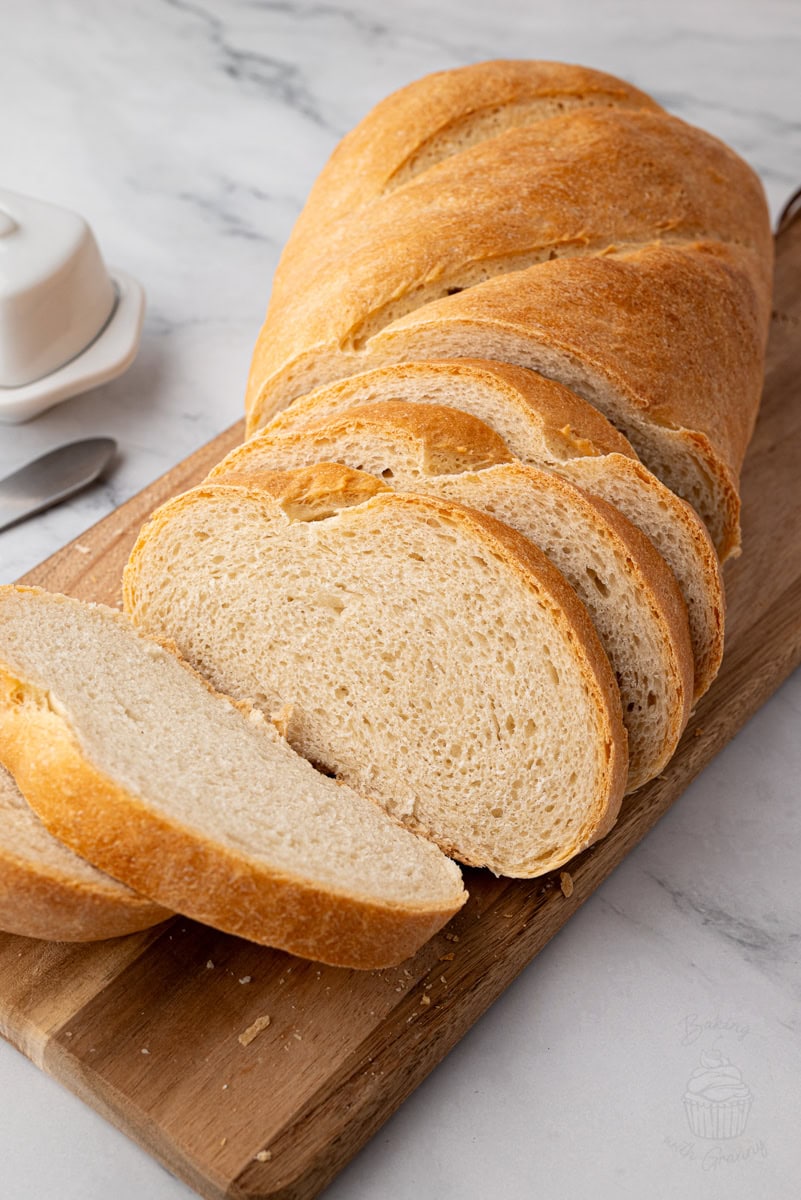
I first shared this Easy Bread recipe back in 2020, at a time when we all suddenly found ourselves baking out of necessity rather than out of choice.
It was a strange time when bread was hard to come by, the shop shelves were empty, and home baking became a bit of a lifeline for a lot of families. This recipe was my way of sharing that homemade bread doesn’t need to be complicated or intimidating, and it doesn’t have to rely on any specialist equipment to be a success.
Fast forward to today (2026), and this easy homemade bread is still one of the recipes I come back to time and time again. Not because we have to bake our own bread anymore, but because it’s genuinely simple, reliable, and endlessly adaptable. Whether you’re baking for sandwiches, toast, or to serve alongside a bowl of soup, this loaf does the job beautifully.
This is a no-fuss bread recipe made with basic store-cupboard ingredients. No bread maker, no stand mixer, no dough hooks required – just a bowl, a bit of kneading, and some patience. If you’re looking for something even quicker, my easy Soda Bread recipe is a great alternative, made without yeast and ready in under an hour.
I’ve tested this loaf with strong bread flour and with plain flour, and I’ve included clear tips below so you can adapt it to what you have on hand. It’s a great place to start if you’re new to bread baking, and a dependable go-to recipe if you’re more experienced and just want a straightforward white loaf that works. And if you prefer baking in smaller portions, these traditional Morning Rolls are another everyday favourite.
At its heart, this is the kind of easy bread recipe generations before us relied on – practical, forgiving, and made to fit around real life. The sort of bread our mums and grannies baked without overthinking it. And honestly? Those are still the best recipes.
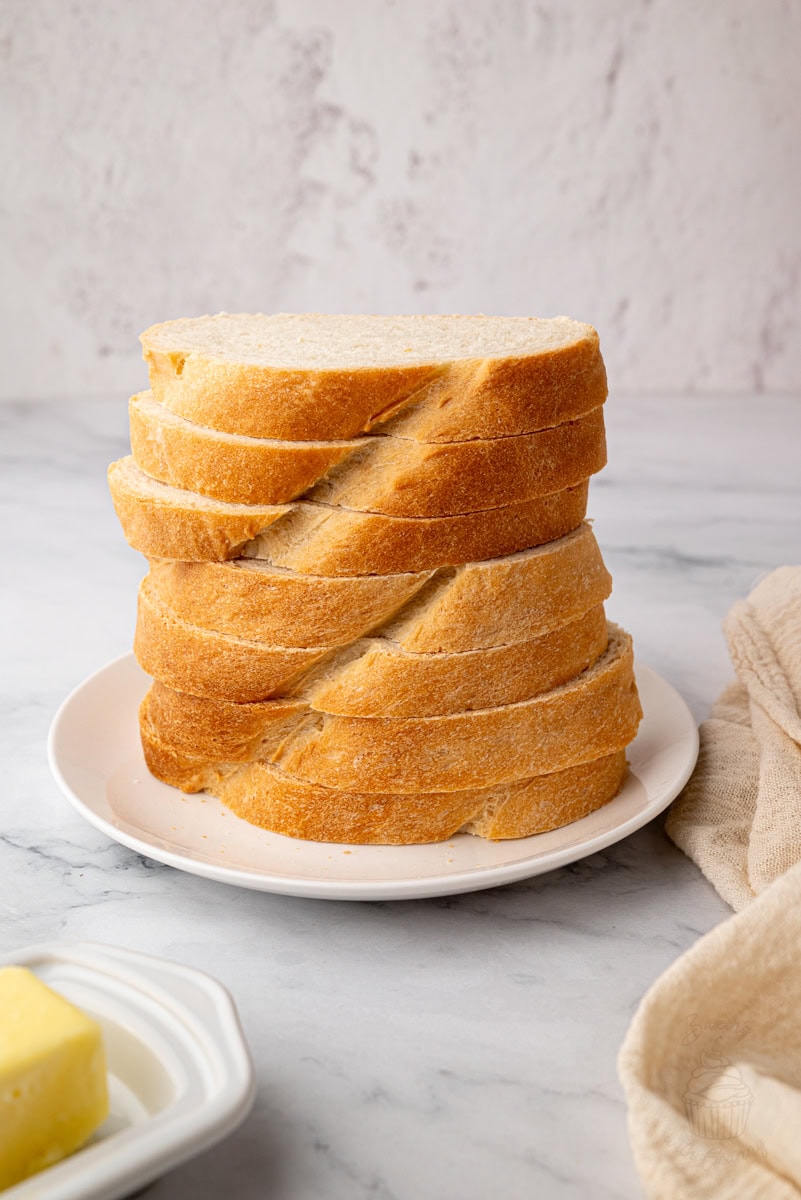
Ingredients for White Bread:
Strong Bread Flour
For the most predictable results, strong bread flour is the best choice for this easy homemade bread. It has a higher protein content, which helps develop gluten and gives the loaf its structure, chew, and rise.
That said, this recipe is deliberately forgiving. If you don’t have strong bread flour, plain flour works well too – you’ll just need to knead the dough a little more to help develop the gluten that is there. I’ve baked this loaf many times using plain flour with great results, and it’s a handy option when you’re working with what’s in the cupboard.
You can also use wholemeal flour if you prefer, though the texture will be slightly denser. A half-and-half mix of white and wholemeal flour is also a good place to start if you’re experimenting.
Fast Action Yeast
Fast-action yeast (usually sold in 7g sachets) is the most widely available yeast these days, and it works brilliantly in this recipe. There’s no need to activate it separately – it can simply be mixed straight into the flour, which keeps this bread recipe simple and approachable.
Salt
Salt plays an important role in bread-making. It slows the yeast down slightly, allowing the gluten structure to develop properly, and it also adds essential flavour. Without it, bread can taste flat and rise too quickly.
I recommend using sea salt for the best flavour. If you use table salt, reduce the quantity a little, otherwise you may end up with an overly salty loaf.
Butter, Margarine or Oil
This ingredient is somewhat optional and highly adaptable, so feel free to experiment with it. Adding a little fat helps soften the crumb and improves the keeping quality of the bread.
I usually use margarine, as it’s what I always have to hand, and it keeps the loaf suitable for vegans. Butter works just as well, and oils can also be used if you want to add some subtle flavour changes. For example, we love using some extra virgin olive oil when using this bread recipe for pizza dough!
Warm Water
Warm water helps wake the yeast up and gets the dough moving more quickly. Cool water will still work, but you’ll need a bit more patience. Just make sure the water isn’t too hot, or it can kill off the yeast.
Tips for making Easy Homemade Bread:
• Don’t overthink the kneading: This isn’t a fussy bread recipe. Give it time (10 minutes of kneading is usually ideal) and as long as the dough feels smooth, elastic, and no longer sticky, you’re on the right track. Bread baking improves with practice, and this recipe is a great way to build your confidence.
• Using plain flour instead of strong bread flour: You can swap strong bread flour for plain flour in this recipe, but expect to have to knead the dough a little longer. Strong flours contain more protein, which means the gluten develops more easily. With plain flour, extra kneading helps wake up the gluten, build structure and gives you a better rise. It takes a bit more effort, but it absolutely works – trust me!
• Making a wholemeal loaf: For a wholemeal version, swap the strong white bread flour for strong wholemeal flour. Wholemeal dough tends to be slightly heavier, so the finished loaf will be denser, but still soft and flavourful. A 50/50 mix of white and wholemeal flour is also a good option if you’re new to wholemeal bread baking.
• Choosing the right salt: For the best flavour, I recommend using sea salt or fine sea salt flakes. If you’re using standard table salt, reduce the quantity slightly, as it can make the bread taste overly salty. And salt isn’t just about flavour – it helps control the yeast, strengthens the dough, and improves the overall structure of the loaf, so it’s best not to skip it.
• Use the dough as an easy pizza base: This dough also makes a great, simple pizza dough, and our families go-to. After the first rise, divide and shape the dough, then roll or stretch it out before adding your toppings. It bakes up soft with a crisp edge and is perfect for quick, homemade pizzas using ingredients you already have.
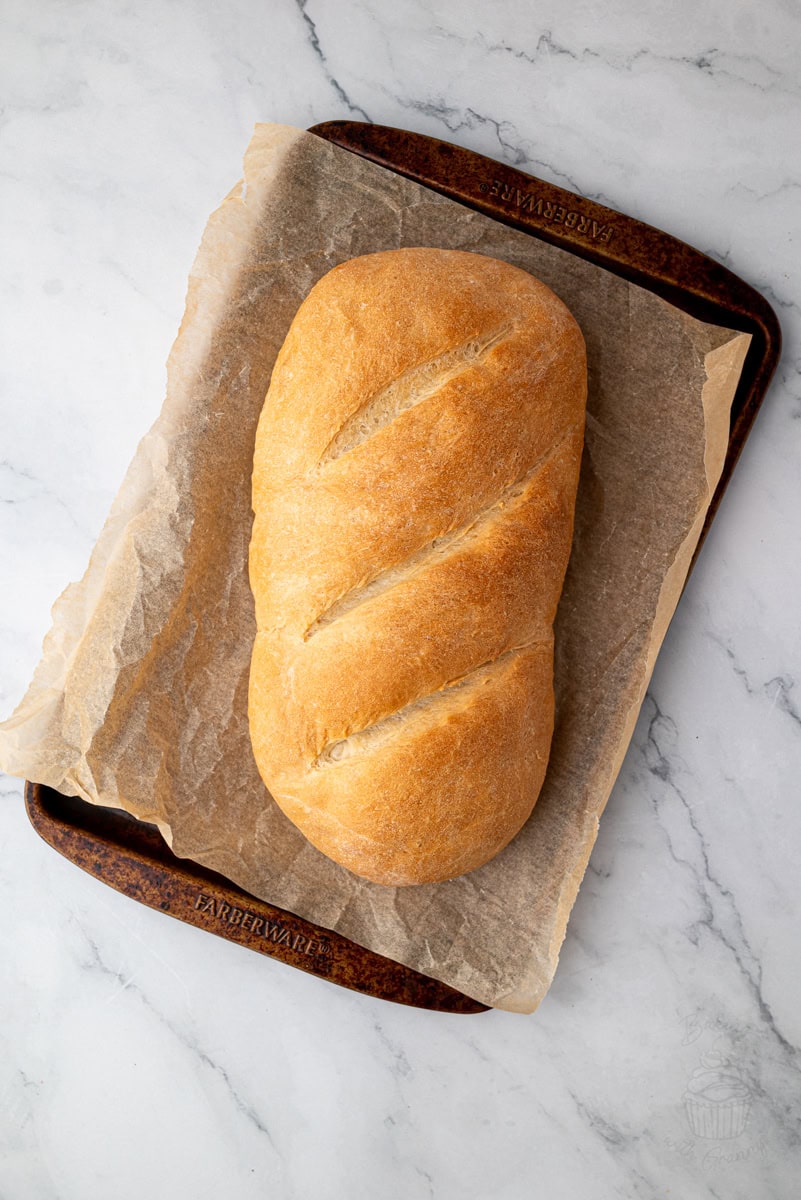
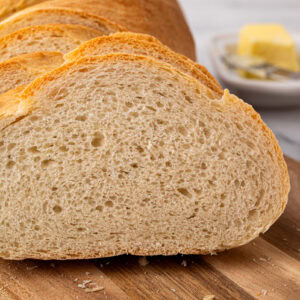
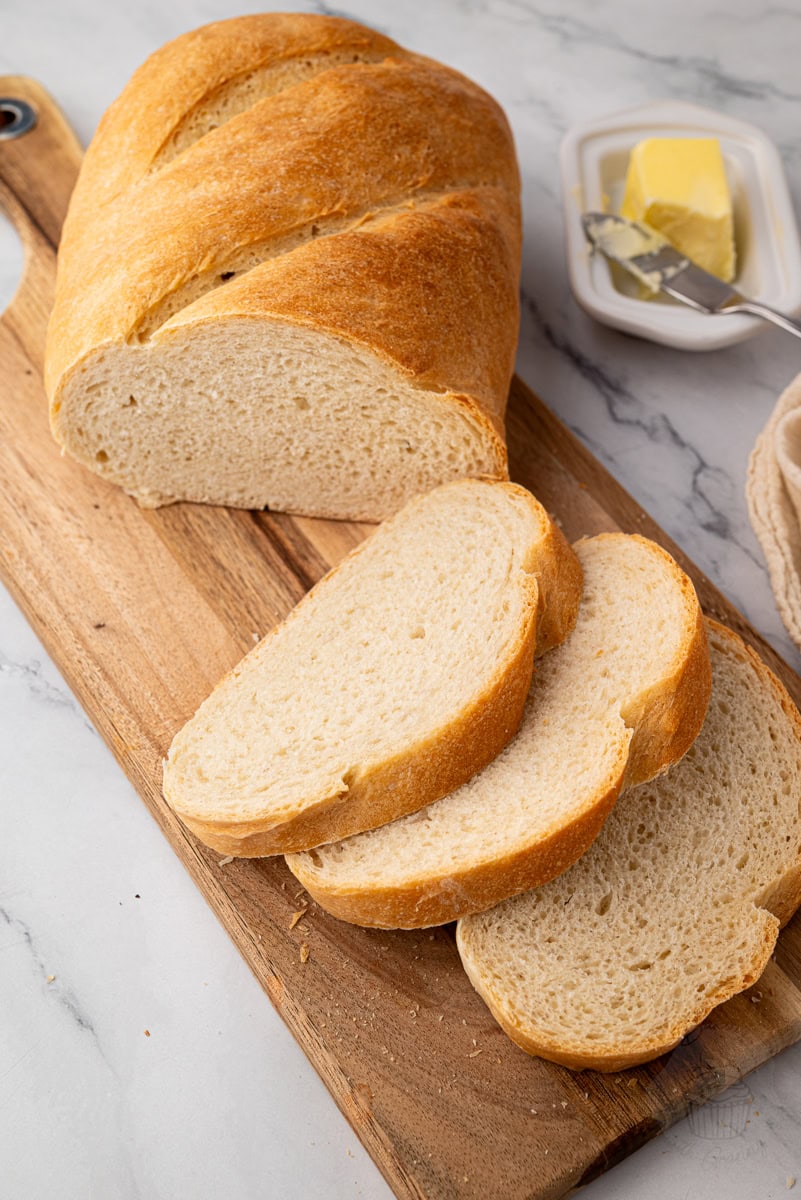
• Shaping your loaf: This easy bread dough is very adaptable. You can shape it into a free-form loaf (like pictured), bake it in a loaf tin, or divide the dough into smaller portions to make homemade bread rolls. Different shapes won’t affect the flavour, but baking times may vary slightly.
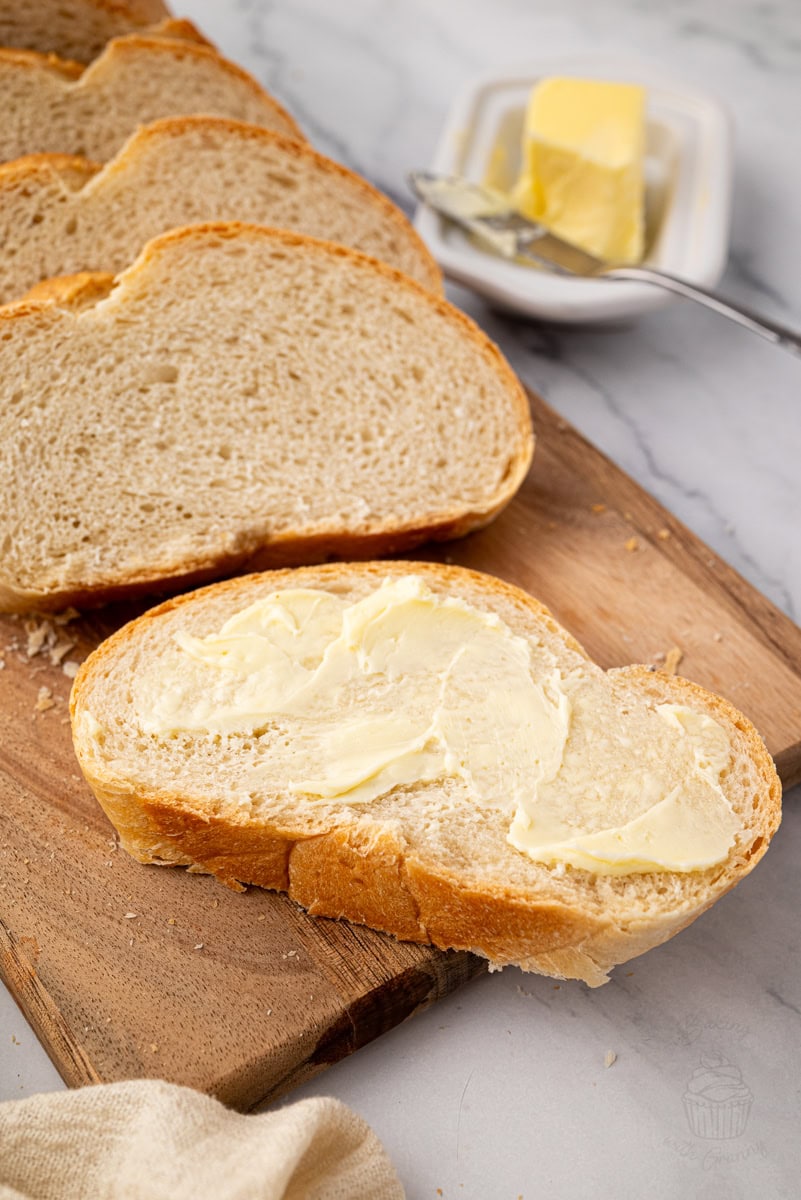
Save this recipe!
Want to save this recipe for later? Pop your email below and come back to it when you’re ready to bake.
Easy Bread
INGREDIENTS
- 500 g Strong White Bread Flour
- 7 g Fast-action Yeast (usually one sachet)
- 2 tsp Sea Salt
- 3 tbsp Butter/Margarine/Oil (whichever you prefer)
- 300 ml Warm Water
INSTRUCTIONS
- In a large bowl, add the flour, yeast and salt and mix to combine. Make a well in the middle of the mixture and add the butter/margarine/oil and warm water. Mix to combine, adding a little more water if required, and using your hands to bring together into a soft, lumpy, slightly sticky dough.
- Turn the dough out onto a floured surface and knead for around 10 minutes, until the dough is smooth and elastic.
- Place the dough in an oiled bowl and cover with a piece of oil cling film, or a damp tea towel. Allow the dough to rise for at least 1 hour, or until it has doubled in size.
- Line a baking sheet with some greaseproof paper and set aside. Knock back the dough (by gently punching the air from the dough and pulling it back on itself) before forming into your desired loaf shape.
- Place the loaf onto your prepared baking sheet (covering again with the oiled cling film or damp tea towel) and leave to prove for a further 1 hour, or until the dough has doubled in size.Preheat your oven to 220°c (200°c for fan-assisted ovens, Gas Mark 7 or 425°F).
- Before baking, with a sharp knife, add a few scores to the top of your bread to allow it to expand while it bakes. Bake for 25–30 minutes until golden brown, and the loaf sounds hollow when tapped underneath
- Leave to cool on a wire rack before slicing.
IMPORTANT NOTE:
All my recipes are developed using a digital scale and the metric system (grams and millilitres). Cup measurements are available as a conversion but these, unfortunately, won’t always be as accurate. For best results, I always recommend baking with a digital scale.
RECIPE NOTES:
- Storage: Once completely cool, store the bread at room temperature in an airtight container or bread bag for up to 2 days. Homemade bread doesn’t keep as long as shop-bought, and it’s at its best within the first day or two.
- Freezing: This loaf freezes well. Slice once cooled, then freeze in an airtight container or freezer bag for up to 3 months. Defrost at room temperature or toast slices straight from the freezer.
- Flour swaps: Strong white bread flour gives the best structure and rise, but plain flour can be used. If using plain flour, knead the dough for a little longer to help develop the gluten. Wholemeal flour can also be used, though the finished loaf will be slightly denser. A 50/50 mix of white and wholemeal flour works well.
- Salt: Sea salt gives the best flavour. If using standard table salt, reduce the quantity slightly, as it can make the bread taste overly salty. Salt is essential for flavour, and for controlling the yeast, so it’s best not to skip it.
- Fat options: Adding butter, margarine, or oil helps soften the crumb and improves keeping quality. Margarine or oil keeps the loaf suitable for vegans.
- Shaping the dough: This dough can be shaped into a free-form loaf (like pictured), baked in a loaf tin, or divided into smaller portions to make bread rolls. Baking times may vary slightly depending on the size and shape.
- Pizza dough: This recipe also works well as a simple pizza dough. After the first rise, divide and shape the dough, then roll or stretch it out before adding toppings and baking.
To make an easy white bread, you combine flour, yeast and salt in a bowl, then add warm water and a little fat (butter or oil) to form a soft dough. Knead until smooth and elastic, leave to rise until doubled in size, shape into a loaf, prove again, then bake until it is golden and hollow-sounding underneath. This recipe breaks the process down step by step, making it ideal for beginners, as well as seasoned bread-bakers.
Yes, you can! Strong bread flour gives the best structure and rise, but plain flour works really well too. You’ll just need to knead the dough a little longer to help develop the gluten. I’ve tested this recipe using both, and it’s very forgiving.
Fast-action yeast (also called instant yeast) works best for this recipe and can be mixed straight into the flour. If you only have active dried yeast, you’ll need to activate it in warm water first (as per the pack instructions) before adding it to the dough.
No, not at all. This bread is designed to be made by hand using a bowl and a wooden spoon – just like bread used to be. There’s no need for a bread maker, stand mixer, or dough hooks, which makes it ideal for beginner bread bakers.
There are a few common reasons why bread won’t rise as expected:
• The yeast may be out of date
• The water was too hot or too cold
• The dough was left somewhere too cool to prove
Bread dough prefers a warm, draught-free spot. If it’s slow to rise, give it more time – under-proving is more common than over-proving when it comes to making bread.
The loaf should be golden brown and sound hollow when tapped on the underside. If you’re unsure, you can also check that the base feels firm rather than soft.
Yes! Once completely cool, slice the loaf and freeze in an airtight container or freezer bag for up to 3 months. Slices can be defrosted at room temperature or toasted straight from frozen.
Free-from & Vegan:
Gluten-Free: This easy bread recipe relies on gluten for structure and rise, so it isn’t suitable for a direct gluten-free flour swap. For the best results, I recommend using a dedicated gluten-free bread recipe that has been specifically developed and tested for gluten-free baking. Becky Excell and The Loopy Whisk both have great gluten-free bread recipes.
Dairy-Free: To make this a bread dairy-free, use margarine or oil in place of butter. The finished loaf will still be soft, flavourful, and suitable for sandwiches or toast.
Egg-Free: This homemade bread recipe contains no eggs.
Vegan: This easy white bread recipe is naturally vegan when made using margarine or oil instead of butter. No other substitutions are needed, making it a simple and reliable vegan bread recipe for everyday baking.
N.B. Any advice or suggestions to make recipes “free-from” or vegan are purely that – suggestions. Please be careful to double-check all ingredients individually, taking extra caution when serving to those with allergies & intolerances.
For more info on common food allergies, please see food.gov.uk | For more info on coeliac disease, please see coeliac.org.uk | For more info on a vegan diet, please see vegansociety.com
Originally published in March 2020. Updated in January 2026.
With thanks to Naomi Seiler for the updated photos.

Just want to say thank you for this recipe. I have never been successful making bread before and was apprehensive (how warm is warm for the water?; what is the best way to prove it? etc*). Google did come up with some useful tips and I am delighted with the result.
* answers – as warm as baby’s milk; in the (unlit) oven along with a bowl of boiling water to create a steamy atmosphere.
Love this can I double it up to make an even bigger loaf
I made this bread today! Absolutely fantastic. Would loved to have posted a picture. Turned out perfect! Thank you
This recipe is the best
Only problem I had was , it was quite salty.
It turned out perfect though so I’m gutted by thst
An American here, with a tip my fellow Americans in the comments. If you don’t know something, there’s a great little resource called Google. Should help you out. Let’s do better than bash our friends across the pond.
Thanks for the great recipe!